It’s Not Just Playing Music: What Makes Music Care Intentional?
Music is everywhere. It plays in the background of waiting rooms, fills quiet spaces, and is often added to care environments with good intentions. But music care is not just about playing music. The difference is intention.
In music care, intention means using music with a clear purpose. It is not just about what is playing, but why it is being used, when it is introduced, and how it supports the moment. It is the difference between turning on any playlist and choosing the right piece of music for what is happening right now.
This shift may seem small, but it changes how music functions in care. When music is used intentionally, it moves from background to something that actively supports the care process. A familiar song used at the same time each day can help signal routine.
A slower tempo can support calm during moments of agitation. An upbeat rhythm can encourage movement and participation. In each case, the music is doing something. It is not just filling space. It is supporting care.
At its core, intentional music care can be understood in three connected ways:
- Use: How music is used in the moment
- Design: How music is structured and selected to support care
- Performance: How music is expressed and adapted to suit different settings and care scenarios
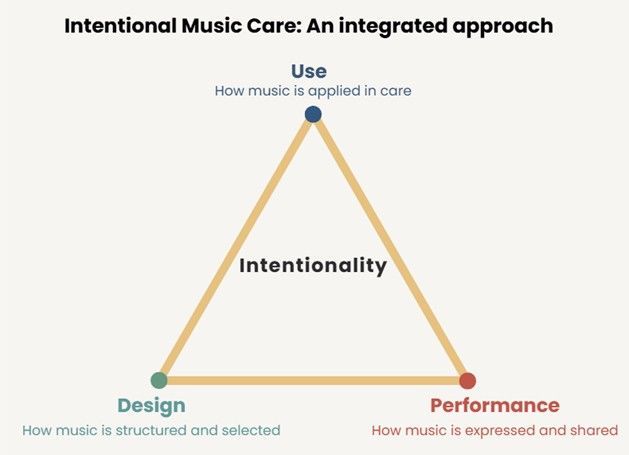
Intentional use is what happens at the point of care. It is about choosing the right music for the moment and using it to support what is happening in real time.
But intention also exists in how music is designed. Some music used in care is created with purpose, with elements like tempo, repetition, and familiarity, chosen to support specific responses such as calming or engagement.
And intention can be shaped in the moment through how music is performed. The same song can be slowed down, softened, or made more rhythmic depending on what is needed. This allows caregivers and musicians to adjust and respond in real time.
We recently heard from a staff member at a MUSIC CARE CERTIFY organization who shared the story of a resident who became very anxious after dinner and would say, “I need to go home but I don’t know how to get there”. With the intentional use of music as part of the dinner routine, that moment began to shift. Music became a consistent part of the transition after dinner, offering something familiar and grounding.
Overtime, the change was noticeable. She became calmer, more engaged, and began participating in singing. Instead of distress, there was a sense of comfort and ease. When staff left, she would simply smile and say, “Ok, I will see you tomorrow”. This is just one of the many ways that music truly supports the experience of care.
Intentional music care does not require specialized equipment or complex plans. It can start with something much simpler: noticing. What is happening in this moment? What does this person need right now? How might music support that? From there, small choices can make a meaningful difference.
One of the most important aspects of music care is not just the music itself, but how it is chosen and used. When music is seen as an add-on, it remains optional and inconsistent. When it is understood as part of care, it becomes something we can use deliberately, thoughtfully, and consistently.
Music care is not just about doing more. It is about doing things differently. With intention, even simple uses of music can support connection, regulation, and everyday moments of care.