Gillian Wortley • November 12, 2026

Music, the Creative Process, and Connection to Nature: An Interview with Composer Cait Nishimura

I had the pleasure of meeting composer Cait Nishimura at this year’s OMEA conference and hearing her breathtaking composition, Echoes of a Northern Lake, performed by the Ontario Band Association. The piece opens with a flute imitating the loon, its haunting call inviting listeners into the stillness of a peaceful lake. I felt part of a collective, brought together through shared reminiscence, emotion, and a sense of wonder.


For those of us engaged in music care, Cait’s work offers a beautiful invitation to consider how creating, performing and listening to music can support connection and emotional well-being.


Cait integrates creativity, a connection with nature, and composing for young and emerging musicians. Her work weaves these strands together with intention, creating opportunities to develop musical skills while exploring feelings, stories and relationships with the world around us.


The inspiration for Echoes of a Northern Lake began with a childhood encounter. Sitting quietly beside the water, Cait watched a loon surface nearby.

“It made this glorious song and then just dove back under the water and was gone again.”


The moment stayed with her, encouraging her to notice the beauty unfolding around her. Years later, she translated that memory into music, using the textures and colours of the wind ensemble to capture the movement of the loon beneath the surface of the water.


But the composition holds more than beauty. Gratitude and nostalgia mingle with grief and concern about habitat loss. It makes room for emotions that many of us find difficult to express.


As a sensitive child, Cait worried about the planet and struggled to understand why others seemed less concerned.


“When I was young, I used to worry a lot, and it was so concerning to me that it seemed that many people around me didn’t care about protecting the planet. And I see that now as a lack of connection.”


Today, she regards her sensitivity as a strength. Composing gives her a way to respond to those feelings and share them with others. Through her music, performers and listeners may feel less alone in their love of the natural world and their fear of losing it.


This is gentle activism, but it also speaks directly to music care: music can offer companionship in difficult feelings, without requiring us to explain or resolve them.

When I asked Cait how music supports her own wellness, she described its immediate, personal impact.


“If I sing for just a few minutes, it is remarkable how I’m able to bring myself back to a more regulated state. And same goes for playing a wind instrument. I play clarinet and bass clarinet.”


Looking back, she recognises that music class offered this support long before she understood it. Singing in the lunchtime choir could change how she experienced the rest of a difficult school day.


Her experience echoes the case for music’s place in education beyond developing musicianship. Music can provide opportunities for expression, belonging and shared accomplishment. For young people navigating complex emotions, the music room can become a place of connection.


Cait’s background as a classroom music teacher informs her compositions for developing musicians. She wants them to encounter music with meaning and emotional depth, while building skills of musicianship. They need not wait until they are accomplished performers to experience that connection.


For Cait, maintaining a creative practice is also part of caring for herself.

“I get to just have this consistent practice of connecting with myself, with my experiences, allowing myself to process my emotions in a healthy way, and alchemize that into something that other people can then have their own experiences around. It feels like magic.”


Her reflections remind us that music care includes both joy and heaviness. Music can accompany grief, anger and uncertainty as well as inspire hope. This dichotomy allows for musical expression for both creators and listeners.


We do not have to be composers or professional musicians to accept the invitation to create or participate in musicking. Singing, playing, listening or creating can become meaningful practices of care in our everyday lives.


Nishimura’s music reaches deeply within you. Her melodies and instrumental colours are stunning. Listen to Golden Hour, and notice what it inspires: a memory, a feeling, perhaps a moment of stillness.


An opportunity to attune to nature inspired music is something we can offer ourselves and those we care for: space to listen, feel and be together, with music as our entry point.
By Shelley Neal • May 28, 2026
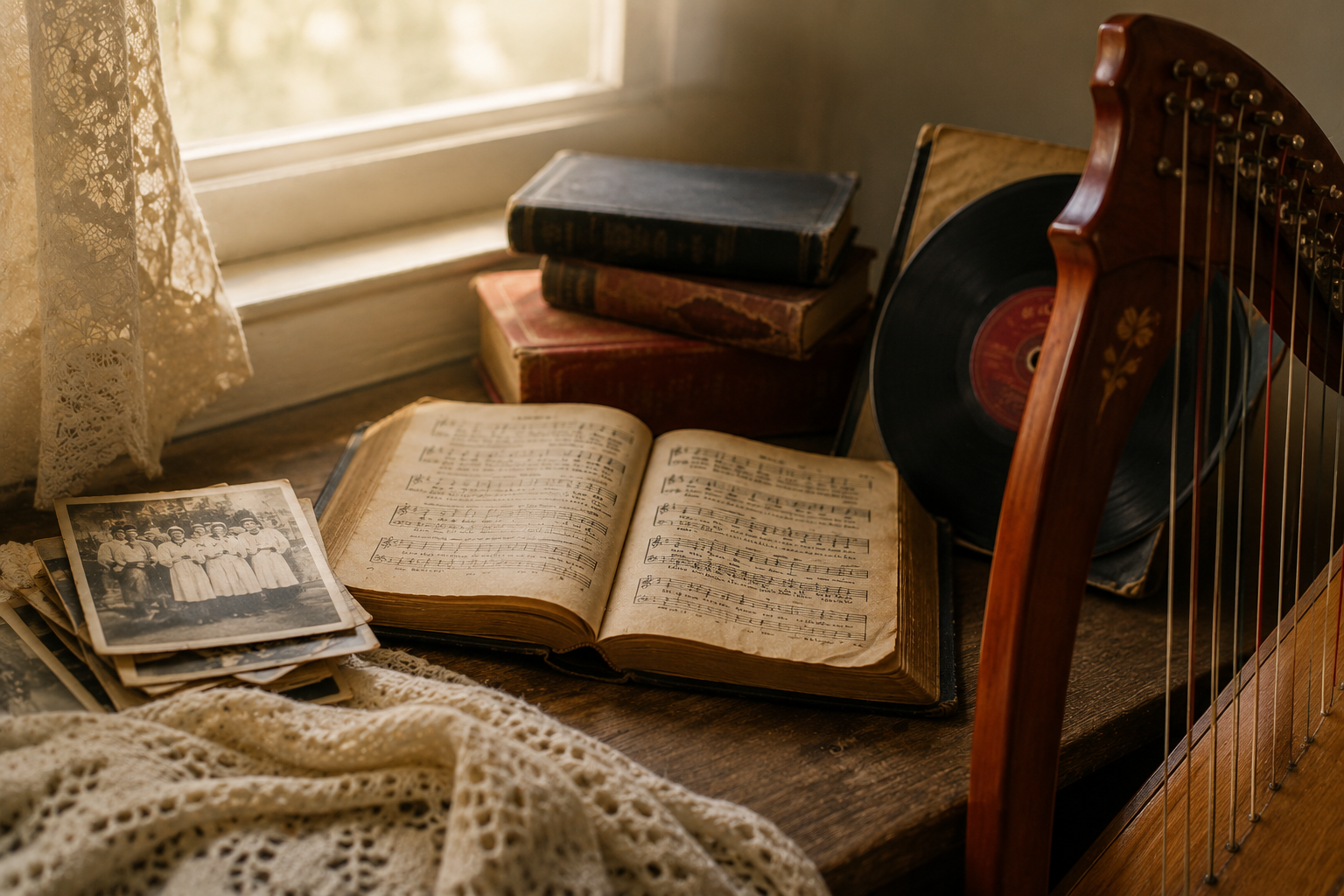
For most of my practice of coming alongside people in care or at the end of life, my harp has been the extension of me. It has traveled in ICUs, nursing homes, funerals, and celebrations of life. But for George, it couldn’t reach into the depths of his ears or into his soul for soothing, comforting, and connecting. George became profoundly deaf at the end of life. George, in his youth, was a very active and attractive young man with many skills athletically and also musically. Both he and his brother were incredible tenors in their church choirs from youth until their sixties. They sang duets and solos in church and with Gilbert and Sullivan Productions. It was actually there that George met the love of his life, Audrey, and they sang together. In my youth at church, George was often gowned in the choir garb, enjoying the music of the church and those “olde hymns”. Later, George’s father’s work as an assayer took him at the age of 16 to Jamaica, where he fell in love with the folk music of the isle. At home, he loved watching Don Messer’s Jubilee; country music was his soft spot. Often after dinner, he would start the turntable and listen to the crooning of the country and western storytellers. Aging, as they say, is not for the faint of heart. The loss of hearing was a huge adjustment for George, and the loss continued until even the hearing aids no longer worked. I would take Ruby, my little red harp, into the nursing home to play, and he would gently smile in his George way and shake his head that he heard nothing. This is where I became the student during the journey. George would bring out copies of his music, such as old hymns and lyrics of favourite love songs. These copies would be yellowed and delicately thin with age. He would begin to sing in his mellow tenor voice, and the memories flooded back. He shared the copies with fellow residences and staff. He would sing to them all. My job was to listen and take in his rich history of music that journaled the passages of his life. Our favourite haunt in the last nine years was Swiss Chalet, every Sunday evening. Often, our Jamaican staff would come out and sing to George. He really couldn’t catch the words the first couple of times, and then he would lip-read Diane’s words, “Come, Mr. Tally Man, Tally Me Banana,” and everyone at the table and surrounding tables would sing. George would randomly sing songs of the past during these dinners, remembering all the words as well as the moments these songs elicited. Then, the talk and connection went deep. His son, Peter, would take notes about all of these wonderful events of a man who lived a humble life well. Our portal into the life of George often came through old black-and-white photos, old hymn books, even old 78 records. He would smile, close his eyes, relax in his lazy boy, and the vocal music would begin. With the music came the stories of life traveling with his family, the depression, World War 2, meeting Audrey, raising his family, and connection with others through music. Even though he could no longer hear, he remembered and could still give the gift of song to others. The lesson is that music is so much more than sound; it is the connection, the stories, and the memories. We, as music care advocates, need not pass by someone who can’t hear as we may feel not useful, but to think beyond the physical sound into the memories of a song. The use of old pictures and hymn books helped us to enter into the past, as did the conversations cards of Music Care. Our job is one of connection and valuing the humanity of a soul. Music provides rich soil for connection. As our body ages and access to many things diminishes, we must still consider how to adapt our approach of using music to connect, through pictures, conversations, touch, and just being in space together sharing who we are. Shelley Neal is a special education teacher and program coordinator, therapeutic musician, and music care advocate in the Greater Toronto Area. Shelley uses music to deliver curriculum, support movement and language development and communication skills with non-verbal children. Her goal is to come alongside people and use music in whole person care.
A guitar , cowboy hat , cowboy boots and hay are on a wooden table.
By Shelley Neal • April 2, 2025
I undertook the MUSIC CARE Certification program when I had journeyed through caring for my mother with Alzheimer’s. It was during my training, I learned how music works in terms of timbre, melody and rhythm and beat, music care domains and music care strategies. It helped me to support mom as the disease progressed. I continued to certify through Music Care and then I had the joy of teaching others the level 1 program Fundamentals of Music Care Theory and Context . I have loved coming alongside others in Long Term Care and using music to support giving voice of what is within one’s life, preventing isolation and loneliness, creating community. I enjoyed all it all. Then, I found myself once again in the Emergency Room with Tim, (my family member) as we were helping him home in his palliative journey. My “outside life” took a back seat and my inside hospital life began. Tim’s was failing and he was no longer able to open his mouth and swallow to obtain nutrient’s due to Parkinson’s . We tried various types of foods, textures and flavours, however, opening his mouth and swallowing remained inaccessible. Tim loved Glen Campbell and Rhinestone Cowboy . When he was a young man, he would repeated play this song until the LP was worn through. He was given a new Glen Campbell CD at Christmas and the song was welcomed back into our lives. There I was ,in my new environment on the tenth floor of the hospital, playing Rhinestone Cowboy. Tim sang along. He actually sang along! He moved his mouth, swallowed and sang along. We were able to get pureed food into his body. Later, the disease continued to ravage his body and Rhinestone Cowboy helped us connected with other such as the speech language pathologist, doctors, cleaning staff and nurses. We sang and danced together with the music and Tim smiled. He knew he was part of a community who loved him. As we knew the end was coming, I played music with a simple melody, 60 beats per minute and soft timbre on my harp to support Tim as he fell into sleep. Near the end, I used tonal music in simple phrases to support calmness matching his breath. Tim passed peacefully and gentle. Today, at his funeral our last song “Rhinestone Cowboy”. After hearing the importance of this song, all the people present joined in singing to honour the village of Tim that so lovingly cared for him. Music Care training has become a natural rhythm in my life to use with aging and sick family members, supporting young children’s learning and providing self-care when I was tired after intense caregiving.
By Shelley Neal • March 8, 2024
I initially trained with MUSIC CARE to work with Seniors in Long Term Care who were experiencing dementia and Alzheimer’s Disease. This is the path I travelled with my mom. My training with Music Care and Room 217 supported capacity building in selecting music that was played on my harp or chosen recorded music. The music centered on the care of the individual and their specific needs. My job was to determine the individual’s specific and select music to address these needs. The music selected helped to build community, support sleep, talk about life experiences, create a background landscape of sound, support connection to decrease isolation and loneliness, as well as coming alongside people dying. My training with Music Care helped me understand how to support people “where they were” physically, emotionally, and spiritually. Through using beat, tempo, melody, and timbre, I could cater the music and desired support required for individuals or small groups. My profession is teaching. I am a special education teacher and use music in my primary teaching as a method for learning, practicing language skills, transmitting information about science studies or math equations, as well as having fun and creating our own songs. My teacher toolkit married exceptionally well with the knowledge and skills provided by the Music Care Certification training. Recently, my work with students has involved individual programming for the medically fragile children and the palliative children. I use music (repeating the chorus several times) to engage and connect with the kiddos. We use music to "talk" about feelings (our communication is through eye gaze, eye blinks, and squeezing hands), and content material. I use music to enjoy our relationship of being together. At times, due to medication for seizures, my little ones can be very sleepy. I increase the tempo, engaging in tapping the beat on her hands and using silly action songs. The giggles and wiggles make it magical. I also use music to tell stories (my students have CVI, cortical vision impairment, so visual perception is difficult). This helps the child to engage in the story arch and adventures. Music is my conduit for reaching out and being with the students. Recently, I had the sacred journey of visiting one of my children in ICU at Sick Kids. I was invited to come to say "goodbye". A dear friend who was an ICU nurse in a different department told me (AKA, insisted) that I bring my harp with me. I wasn't sure if this would be appropriate for the family. However, with the permission of the mom, I bravely packed my harp up and took it to the Unit. It was a beautiful evening of talking with their mom and dad about how special their child was in my life. I played the kiddo's favorite songs and then ended with "The More We Get Together". The little one opened their eyes and stared at me. We hugged, and I left. They passed the next morning. I consider this time to be a sacred gift. Music Care Certification has given me the confidence and toolset to work alongside people and to journey together. It is a time a beautiful, difficult, or sacred time that I have been honoured to participate in.  Thank You
By Julia Cara • March 29, 2022
This article was written by Julia Cara, and is part of a series provided by upper year Health Sciences students at McMaster University.
By Bev Foster • January 10, 2022
I will never forget the call that came on that cold, crisp January afternoon twenty years ago. I knew it was imminent. I was expecting it and I thought I was ready. But would I ever be ready to say the final farewell to my father?
By Deb Bartlett • September 11, 2020
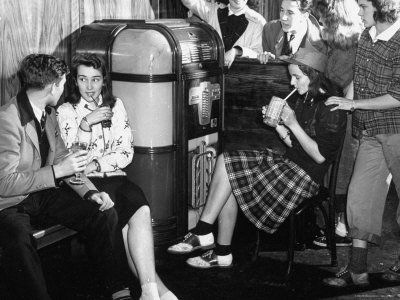
Poodles skirts, saddle shoes, ducktails and fins on your cars. If these words don’t evoke memories and images from the ‘50s maybe this will:
By Deb Bartlett • August 28, 2020
Ask people what folk music is, and you'll get a variety of answers. Is it about the music? The lyrics? The song's history? According to Wikipedia's entry on folk music , it's all of those things: music that's performed by custom over a long period of time; that has no known composers; and that has been transmitted orally. It can describe the traditions of the "uncultured classes" and definitely means it's music of the people. And because it's been shared orally, it is music that has a place, or is indicative of a community. In some circles, because folk music tells stories about events and history, it's known as world music. In a dissertation, Rachel Clare Donaldson simply stated "Folk music is what the people sing."
By Deb Bartlett • August 24, 2020
As explained in this blog post Not Afraid album, the intent behind the Not Afraid album was not to tell people in hospice palliative care that they needn't be afraid; it was to let them know there are people who love them and are sharing the journey.
By Deb Bartlett • August 17, 2020
Room 217 ’s music was designed for use in palliative care. The music is produced at 60 beats per minute (resting heart rate) which has several benefits for the person receiving palliative care. It also aids others in the circle of care. This link will take you to a report that discusses the benefits of music in hospice palliative care .
By Deb Bartlett • August 11, 2020
Do you remember where you were the first time you heard them? The Beatles? Had you heard them on the radio? Or was your first experience with The Beatles watching the Jack Paar show, or Ed Sullivan?
More Posts