Sarah Peason • December 10, 2015

Music for the Holidays

It’s December and Christmas music is everywhere. You’ve probably been hearing it for a few weeks already. In shopping malls and storefronts, blaring from skating rinks, on the radio and in almost every commercial you see on TV.

Requests for Christmas music at the hospital where I work have been mounting. I am based on an oncology unit at a local hospital as a music therapist, and there are few times in the year where the emotional impact of music on patients is better understood than during the Christmas season.

The other day I was playing Silent Night, by request in the room of a patient who was awaiting transfer to hospice. It’s a tender song that for many connects them to the deepest sense of beauty, closeness and safety. I was aware that it was a comforting, intimate musical offering for this patient.

I was also aware of who else this melody might be reaching on the hospital unit. As the strains of Silent Night trickled down the hallway, I worried about other patients and families struggling with painful procedures, difficult prognoses, and the anxiety of uncertainty. I wondered where this song might be reaching them, and how.

This is one of the most challenging parts of my job.

Christmas music can pull on our heartstrings in a flash of a moment. It’s powerful and memory-rich for most people, even if they didn’t grow up celebrating Christmas. Most of us are also no strangers to the familiar melodies that, if we grew up in North America, we’ve been exposed to since birth. With every tune can come decades of associations, some reaching back to early childhood. This is nothing to take lightly.

Christmas music can convey all the complexities of a festive season. It can bring people back instantly to a time of joy and peace that may feel painfully long-gone. It can wrap a person in warm fuzzy feelings and be of profound spiritual comfort. It can reinforce someone’s feelings of isolation, loneliness, anger or depression. It can bring a person to tears. It’s also no secret that, with all the joy and cheer associated with this time of year, it’s also when suicide rates, domestic strife, and mental health crises are at their highest. The music of the season carries that legacy too.

This knowledge makes me nervous about playing Christmas music in my hospital, where everyone can hear it. I take comfort in the fact that, realistically, Christmas music is already everywhere. The same family I might trigger by playing Silent Night in a neighbour’s room would probably have heard that song from some TV commercial when they wandered into the family lounge for a coffee break. I take comfort in the strong team I work with of nurses, social workers, chaplains, physicians and other allied health, who will be able to provide support if someone suddenly finds themselves emotionally jarred. And I trust my own training and supervision that I am making clinically responsible musical decisions, and that I have the chops to support those who might be negatively impacted.

Having said all this, I still play tons of Christmas music at the hospital this time of year. For all my caution, the feedback from patients, families and staff is almost always overwhelmingly positive.

Perhaps it’s so effective because Christmas music is so complex. It’s not just connecting people with happy feelings. It’s connecting them with the broad spectrum of emotions that makes them who they are.

This, ultimately, is why I think music is such a powerful agent of care. Not because it can “cheer people up” – often it doesn’t. Rather, music can connect us to ourselves. And when we’re committed to delivering person-centered care, this is about as valuable an outcome as any.

A few words of caution when sharing Christmas music in your care space:
- Do it gently. Don’t saturate the space with it. Find music that is mellow enough in mood and tempo, at a volume that won’t dominate the space.
- Know your supports. Be aware that sentimental music of any kind may be the tipping point for a person under extreme emotional stress to finally let it out and cry. Be aware of this, and plan in advance. Do you have the capacity to support people through a cathartic cry? Are there people nearby who can?
- Keep it consensual. Whenever possible, let people “opt in” to attending a carol-singalong, Christmas concert, or music-listening time. If you’re playing music somewhere like a hospital, hospice, waiting room, or over a sound system, be aware of people’s ability to tune in or tune out. Keeping it at 20 minutes is a nice protocol when playing for a “captive audience” (roving carolers in a hospital, for example).
- Ask for requests. Engage with people and their relationships to Christmas music! Ask for their favourite carol, and ask what that carol means to them. Let the music be a point of connection. Make it safe to talk about not just happy associations with Christmas music, but challenging ones.
- Celebrate this music together. You don’t have to celebrate Christmas to find it significant, poignant and beautiful. It is a shared cultural language in North America and something that most people can connect over. Celebrate that wonderful opportunity for relationship! That’s what care through music is all about!

Sarah Pearson is a music therapist working in oncology and palliative care in Kitchener, ON . She is the Program Development Coordinator for the Room 217 Foundation and Lead Facilitator of the Music Care Certificate Program.
By Shelley Neal May 28, 2026
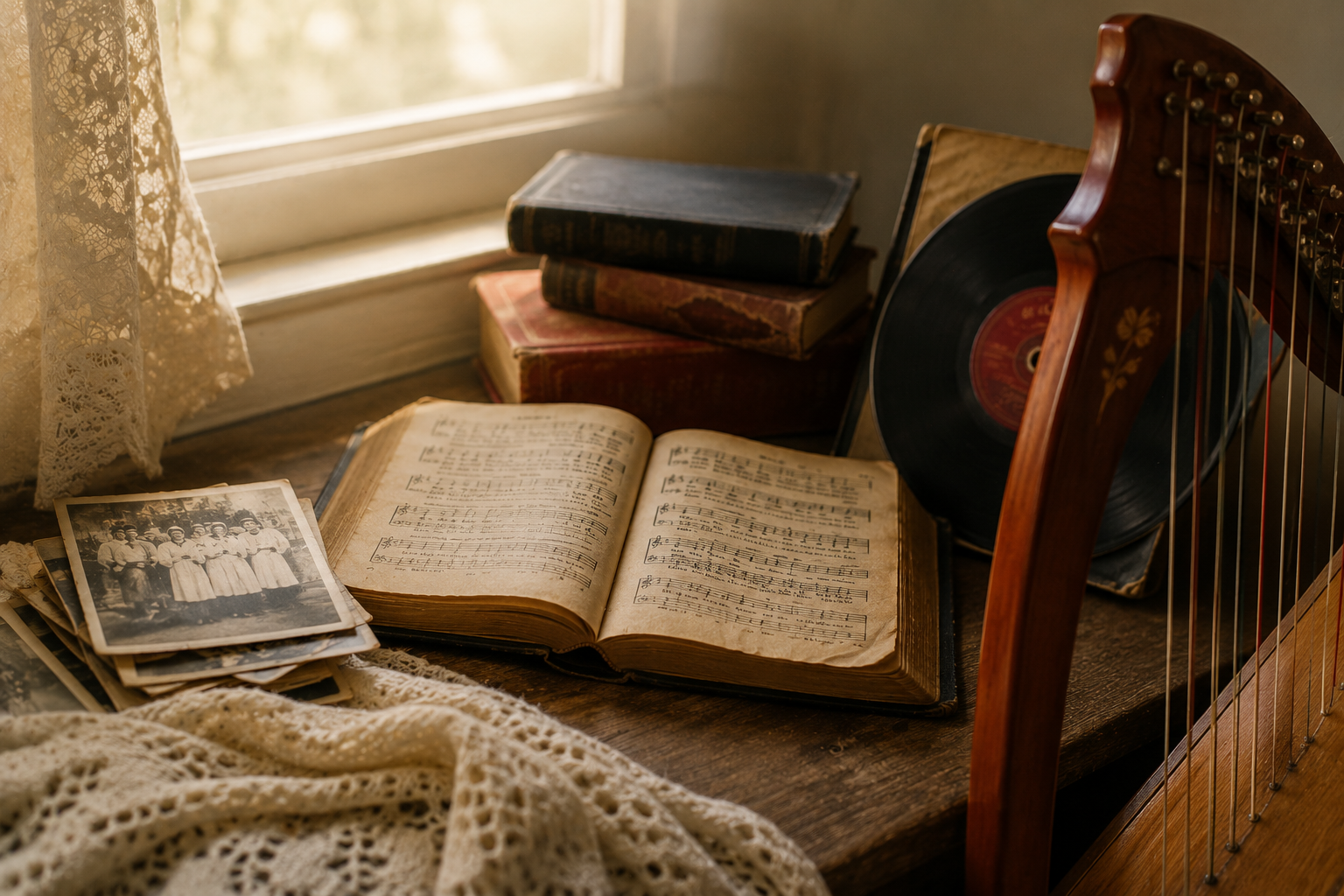
For most of my practice of coming alongside people in care or at the end of life, my harp has been the extension of me. It has traveled in ICUs, nursing homes, funerals, and celebrations of life. But for George, it couldn’t reach into the depths of his ears or into his soul for soothing, comforting, and connecting. George became profoundly deaf at the end of life. George, in his youth, was a very active and attractive young man with many skills athletically and also musically. Both he and his brother were incredible tenors in their church choirs from youth until their sixties. They sang duets and solos in church and with Gilbert and Sullivan Productions. It was actually there that George met the love of his life, Audrey, and they sang together. In my youth at church, George was often gowned in the choir garb, enjoying the music of the church and those “olde hymns”. Later, George’s father’s work as an assayer took him at the age of 16 to Jamaica, where he fell in love with the folk music of the isle. At home, he loved watching Don Messer’s Jubilee; country music was his soft spot. Often after dinner, he would start the turntable and listen to the crooning of the country and western storytellers. Aging, as they say, is not for the faint of heart. The loss of hearing was a huge adjustment for George, and the loss continued until even the hearing aids no longer worked. I would take Ruby, my little red harp, into the nursing home to play, and he would gently smile in his George way and shake his head that he heard nothing. This is where I became the student during the journey. George would bring out copies of his music, such as old hymns and lyrics of favourite love songs. These copies would be yellowed and delicately thin with age. He would begin to sing in his mellow tenor voice, and the memories flooded back. He shared the copies with fellow residences and staff. He would sing to them all. My job was to listen and take in his rich history of music that journaled the passages of his life. Our favourite haunt in the last nine years was Swiss Chalet, every Sunday evening. Often, our Jamaican staff would come out and sing to George. He really couldn’t catch the words the first couple of times, and then he would lip-read Diane’s words, “Come, Mr. Tally Man, Tally Me Banana,” and everyone at the table and surrounding tables would sing. George would randomly sing songs of the past during these dinners, remembering all the words as well as the moments these songs elicited. Then, the talk and connection went deep. His son, Peter, would take notes about all of these wonderful events of a man who lived a humble life well. Our portal into the life of George often came through old black-and-white photos, old hymn books, even old 78 records. He would smile, close his eyes, relax in his lazy boy, and the vocal music would begin. With the music came the stories of life traveling with his family, the depression, World War 2, meeting Audrey, raising his family, and connection with others through music. Even though he could no longer hear, he remembered and could still give the gift of song to others. The lesson is that music is so much more than sound; it is the connection, the stories, and the memories. We, as music care advocates, need not pass by someone who can’t hear as we may feel not useful, but to think beyond the physical sound into the memories of a song. The use of old pictures and hymn books helped us to enter into the past, as did the conversations cards of Music Care. Our job is one of connection and valuing the humanity of a soul. Music provides rich soil for connection. As our body ages and access to many things diminishes, we must still consider how to adapt our approach of using music to connect, through pictures, conversations, touch, and just being in space together sharing who we are. Shelley Neal is a special education teacher and program coordinator, therapeutic musician, and music care advocate in the Greater Toronto Area. Shelley uses music to deliver curriculum, support movement and language development and communication skills with non-verbal children. Her goal is to come alongside people and use music in whole person care.
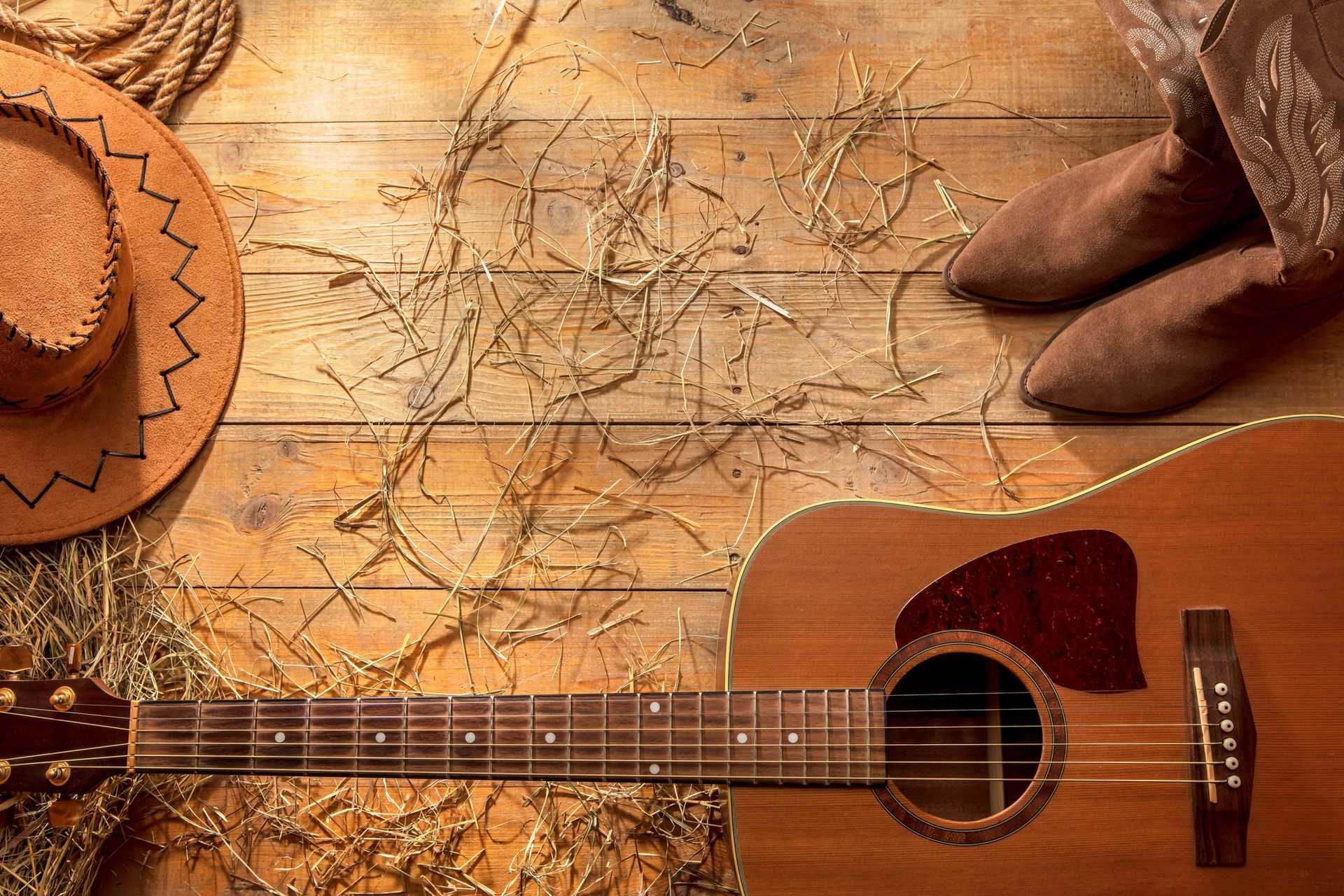
A guitar , cowboy hat , cowboy boots and hay are on a wooden table.
By Shelley Neal April 2, 2025
I undertook the MUSIC CARE Certification program when I had journeyed through caring for my mother with Alzheimer’s. It was during my training, I learned how music works in terms of timbre, melody and rhythm and beat, music care domains and music care strategies. It helped me to support mom as the disease progressed. I continued to certify through Music Care and then I had the joy of teaching others the level 1 program Fundamentals of Music Care Theory and Context . I have loved coming alongside others in Long Term Care and using music to support giving voice of what is within one’s life, preventing isolation and loneliness, creating community. I enjoyed all it all. Then, I found myself once again in the Emergency Room with Tim, (my family member) as we were helping him home in his palliative journey. My “outside life” took a back seat and my inside hospital life began. Tim’s was failing and he was no longer able to open his mouth and swallow to obtain nutrient’s due to Parkinson’s . We tried various types of foods, textures and flavours, however, opening his mouth and swallowing remained inaccessible. Tim loved Glen Campbell and Rhinestone Cowboy . When he was a young man, he would repeated play this song until the LP was worn through. He was given a new Glen Campbell CD at Christmas and the song was welcomed back into our lives. There I was ,in my new environment on the tenth floor of the hospital, playing Rhinestone Cowboy. Tim sang along. He actually sang along! He moved his mouth, swallowed and sang along. We were able to get pureed food into his body. Later, the disease continued to ravage his body and Rhinestone Cowboy helped us connected with other such as the speech language pathologist, doctors, cleaning staff and nurses. We sang and danced together with the music and Tim smiled. He knew he was part of a community who loved him. As we knew the end was coming, I played music with a simple melody, 60 beats per minute and soft timbre on my harp to support Tim as he fell into sleep. Near the end, I used tonal music in simple phrases to support calmness matching his breath. Tim passed peacefully and gentle. Today, at his funeral our last song “Rhinestone Cowboy”. After hearing the importance of this song, all the people present joined in singing to honour the village of Tim that so lovingly cared for him. Music Care training has become a natural rhythm in my life to use with aging and sick family members, supporting young children’s learning and providing self-care when I was tired after intense caregiving.
By Shelley Neal March 8, 2024
I initially trained with MUSIC CARE to work with Seniors in Long Term Care who were experiencing dementia and Alzheimer’s Disease. This is the path I travelled with my mom. My training with Music Care and Room 217 supported capacity building in selecting music that was played on my harp or chosen recorded music. The music centered on the care of the individual and their specific needs. My job was to determine the individual’s specific and select music to address these needs. The music selected helped to build community, support sleep, talk about life experiences, create a background landscape of sound, support connection to decrease isolation and loneliness, as well as coming alongside people dying. My training with Music Care helped me understand how to support people “where they were” physically, emotionally, and spiritually. Through using beat, tempo, melody, and timbre, I could cater the music and desired support required for individuals or small groups. My profession is teaching. I am a special education teacher and use music in my primary teaching as a method for learning, practicing language skills, transmitting information about science studies or math equations, as well as having fun and creating our own songs. My teacher toolkit married exceptionally well with the knowledge and skills provided by the Music Care Certification training. Recently, my work with students has involved individual programming for the medically fragile children and the palliative children. I use music (repeating the chorus several times) to engage and connect with the kiddos. We use music to "talk" about feelings (our communication is through eye gaze, eye blinks, and squeezing hands), and content material. I use music to enjoy our relationship of being together. At times, due to medication for seizures, my little ones can be very sleepy. I increase the tempo, engaging in tapping the beat on her hands and using silly action songs. The giggles and wiggles make it magical. I also use music to tell stories (my students have CVI, cortical vision impairment, so visual perception is difficult). This helps the child to engage in the story arch and adventures. Music is my conduit for reaching out and being with the students. Recently, I had the sacred journey of visiting one of my children in ICU at Sick Kids. I was invited to come to say "goodbye". A dear friend who was an ICU nurse in a different department told me (AKA, insisted) that I bring my harp with me. I wasn't sure if this would be appropriate for the family. However, with the permission of the mom, I bravely packed my harp up and took it to the Unit. It was a beautiful evening of talking with their mom and dad about how special their child was in my life. I played the kiddo's favorite songs and then ended with "The More We Get Together". The little one opened their eyes and stared at me. We hugged, and I left. They passed the next morning. I consider this time to be a sacred gift. Music Care Certification has given me the confidence and toolset to work alongside people and to journey together. It is a time a beautiful, difficult, or sacred time that I have been honoured to participate in.  Thank You
By Julia Cara March 29, 2022
This article was written by Julia Cara, and is part of a series provided by upper year Health Sciences students at McMaster University.
By Bev Foster January 10, 2022
I will never forget the call that came on that cold, crisp January afternoon twenty years ago. I knew it was imminent. I was expecting it and I thought I was ready. But would I ever be ready to say the final farewell to my father?
By Deb Bartlett September 11, 2020
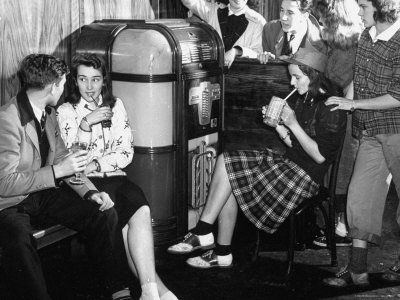
Poodles skirts, saddle shoes, ducktails and fins on your cars. If these words don’t evoke memories and images from the ‘50s maybe this will:
By Deb Bartlett August 28, 2020
Ask people what folk music is, and you'll get a variety of answers. Is it about the music? The lyrics? The song's history? According to Wikipedia's entry on folk music , it's all of those things: music that's performed by custom over a long period of time; that has no known composers; and that has been transmitted orally. It can describe the traditions of the "uncultured classes" and definitely means it's music of the people. And because it's been shared orally, it is music that has a place, or is indicative of a community. In some circles, because folk music tells stories about events and history, it's known as world music. In a dissertation, Rachel Clare Donaldson simply stated "Folk music is what the people sing."
By Deb Bartlett August 24, 2020
As explained in this blog post Not Afraid album, the intent behind the Not Afraid album was not to tell people in hospice palliative care that they needn't be afraid; it was to let them know there are people who love them and are sharing the journey.
By Deb Bartlett August 17, 2020
Room 217 ’s music was designed for use in palliative care. The music is produced at 60 beats per minute (resting heart rate) which has several benefits for the person receiving palliative care. It also aids others in the circle of care. This link will take you to a report that discusses the benefits of music in hospice palliative care .
By Deb Bartlett August 11, 2020
Do you remember where you were the first time you heard them? The Beatles? Had you heard them on the radio? Or was your first experience with The Beatles watching the Jack Paar show, or Ed Sullivan?
More Posts